Tagged Red Grouper Recaptured Just 52 Days Later — A Citizen Science Success Story
🐟 TAGGED RED GROUPER RECAPTURED JUST 52 DAYS LATER — A CITIZEN SCIENCE SUCCESS STORY
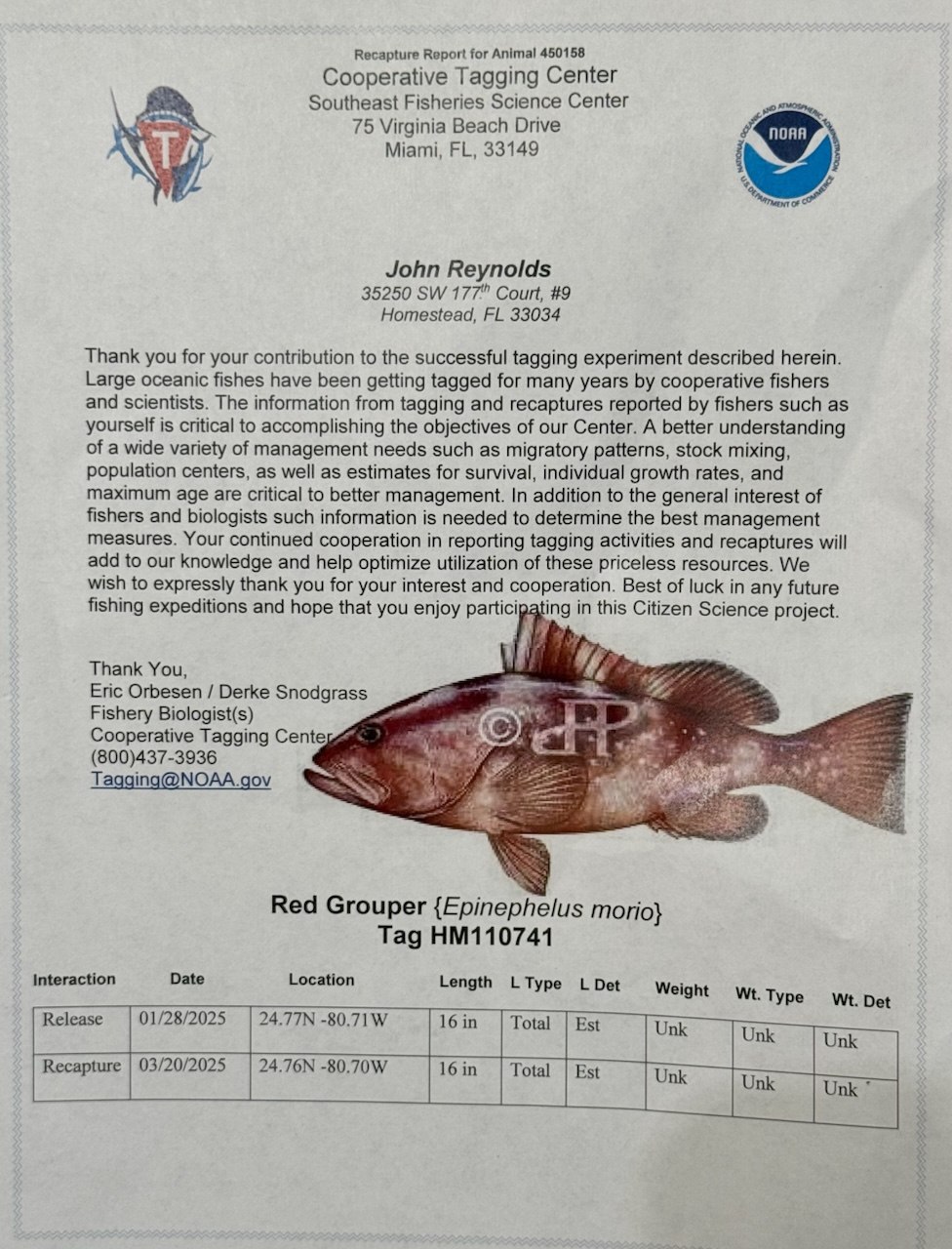
May 5, 2026 — A red grouper tagged by S.A.F.E. President Captain Jon Reynolds was recaptured just 52 days later barely a mile from its release point, according to an official recapture report from the NOAA Cooperative Tagging Center.
The fish, a red grouper (Epinephelus morio) carrying tag HM110741, was released on January 28, 2025 at coordinates 24.77°N, 80.71°W — approximately 6 miles south of Islamorada in the Atlantic. On March 20, 2025, just 52 days later, the same fish was recaptured at 24.76°N, 80.70°W — less than a mile from where it was tagged.
📋 TAG RECAP
| Species | Red Grouper (Epinephelus morio) |
| Tag Number | HM110741 |
| Released | January 28, 2025 — 24.77°N, 80.71°W (Islamorada) |
| Recaptured | March 20, 2025 — 24.76°N, 80.70°W (0.7 miles away) |
| Days at Liberty | 52 days |
| Length (both) | 16 inches total length |
| Weight | Unknown (released alive both times) |
What This Tells Us
While a 52-day recapture barely a mile from the release site might sound unremarkable, it's actually valuable data for fisheries scientists. Red grouper are site-associated reef fish — they don't migrate hundreds of miles like pelagics do. This recapture confirms:
- Strong site fidelity — the fish stayed in the exact same reef structure for nearly two months
- Stable habitat — the reef this grouper calls home remains healthy enough to support it
- High survival rate — the fish survived release, returned to its territory, and was caught again by a different angler, confirming that catch-and-release works when done properly
- Migratory patterns — where fish go and when
- Stock mixing — whether local fish stay local or mingle with broader populations
- Survival rates — how many tagged fish survive catch-and-release
- Growth rates — how fast fish grow between release and recapture
- Maximum age — how long these fish live
- Request a tagging kit at dolphintagging.com
- Report any tagged fish you catch to 1-800-437-3936 or Tagging@NOAA.gov
- Tag and release responsibly — use proper dehooking tools and keep fish in the water
Why Citizen Science Matters
Every tag return tells a story. The NOAA Cooperative Tagging Center, managed by the Southeast Fisheries Science Center in Miami, has been running this program for decades. Fishers like Captain Reynolds provide the boots-on-the-ground data that helps scientists understand:
In this case, the fact that the grouper was 16 inches both times and was released alive each time is good news — it suggests the fish was handled properly, survived the encounter, and had no noticeable impact from the tag.
Get Involved
Want to participate in this critical research?
Every tag is a data point. Every data point makes our fisheries better managed. And better managed fisheries mean more fish for everyone.
📬 Report a Tagged Fish
NOAA Cooperative Tagging Center
(800) 437-3936
Tagging@NOAA.gov
Share This Story
More From S.A.F.E.
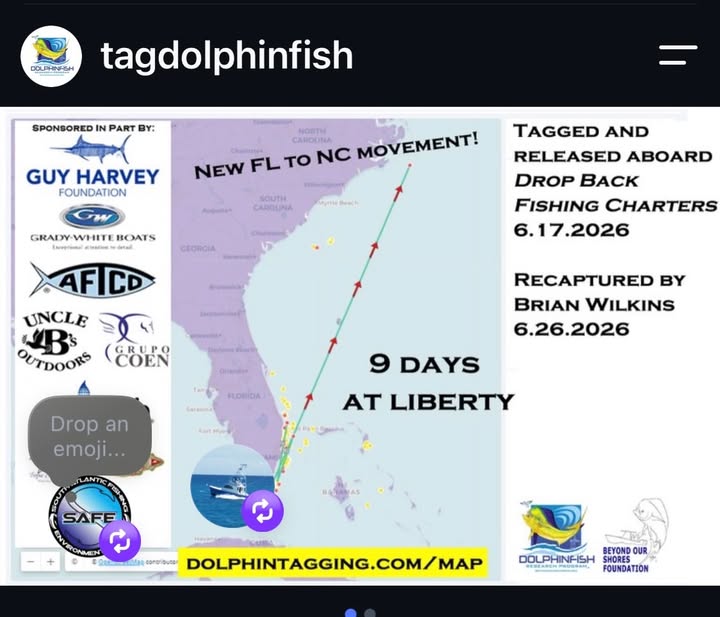
Tagged Mahi Travels Islamorada to North Carolina in 9 Days: Another Drop Back Recapture
Billy Dunn tagged a mahi on Drop Back Charters June 17. Nine days later Brian Wilkins caught the same fish off North Carolina, about 700 nautical miles up the coast.
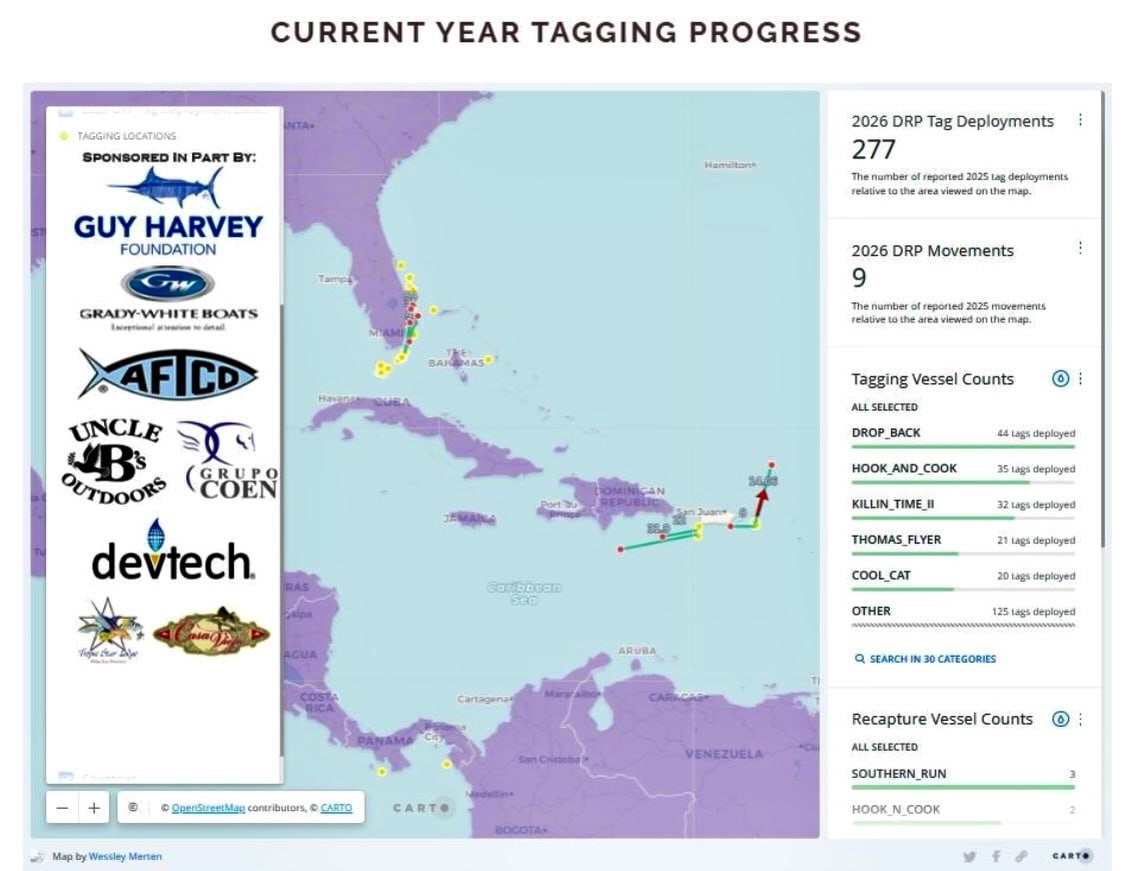
Drop Back Charters Takes Early Lead in 2026 DRP Tagging — Can They Hold the Title?
Drop Back Charters leads the fleet with 44 billfish tags deployed so far in 2026, but Hook & Cook and Killin' Time II are closing fast. Can Harpoon Billy keep the top spot?
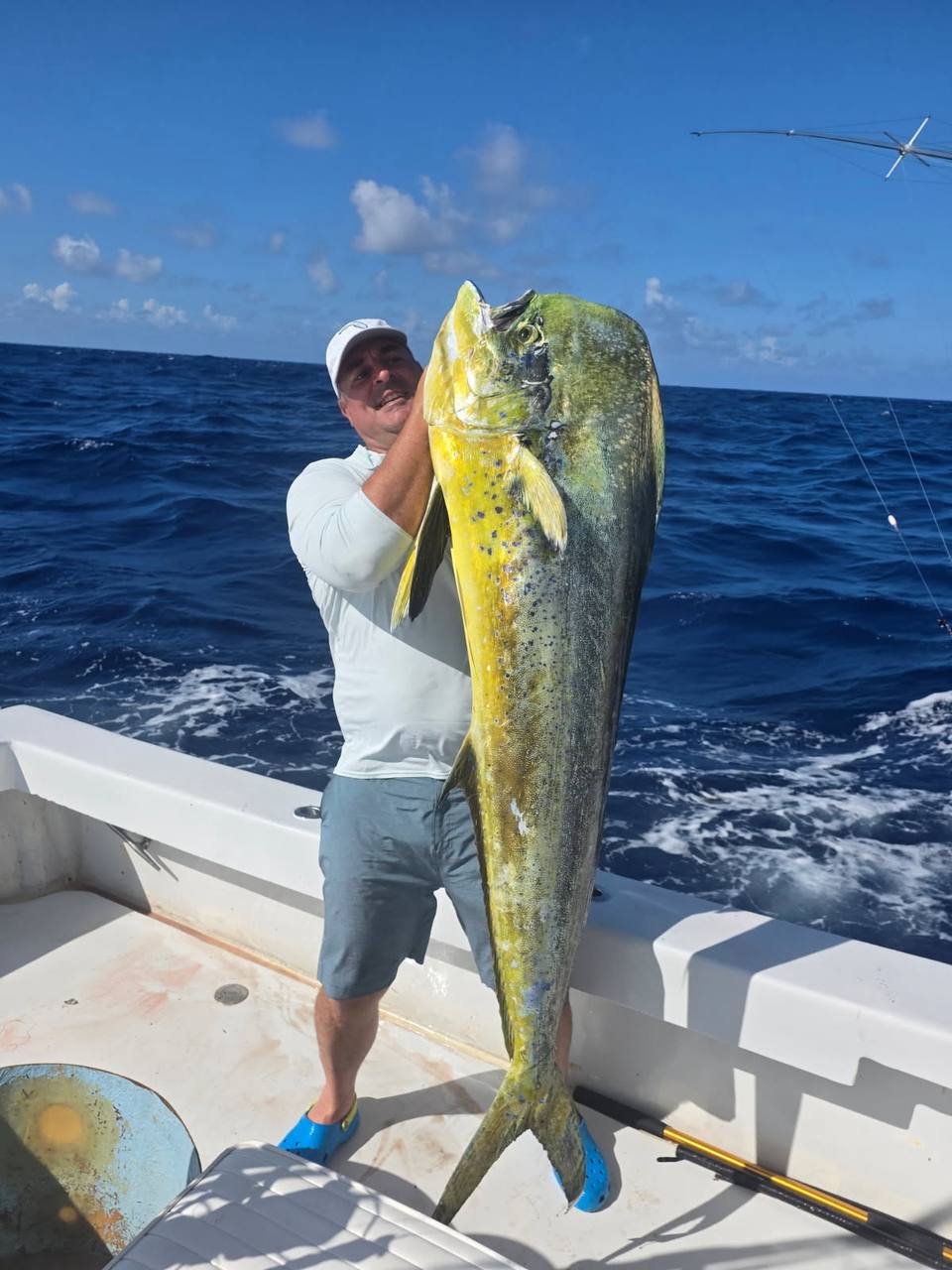
Two S.A.F.E. Slammer Members Land 60+ lb Mahi in Islamorada — Conservation Pays Off
S.A.F.E. Slammer members Captain Kenny Spaulding and Captain Joe Snyder each put their anglers on 60+ lb bull mahi on the same day out of Islamorada — proof that our mahi conservation efforts are delivering real results.
Join the Fight
Ready to take action? Become a S.A.F.E. member and help us protect the fisheries we love.